





Children's Residential Care vs Supported Living: Which Role Is Right for You?
June 30, 2026
If you're exploring a career in social care or thinking about making a move within the sector you may have come across two types of roles that often appear side by side: children's residential care and supported living.
On the surface, they can seem similar. Both involve supporting vulnerable people. Both require empathy, patience and commitment. And both offer genuinely rewarding careers where you make a real difference every day.
But spend a little time in each environment and you'll quickly discover they feel very different to work in. The people you support are different. The pace of the work is different. The emotional demands are different. And the skills and qualities you need to thrive are different too.
If you're trying to decide which path might suit you best or you're curious about what each role actually involves this guide is for you.
What is Children's Residential Care?
Children's residential care involves supporting children and young people who are unable to live with their families. This typically includes young people who are looked after by the local authority, have experienced trauma, abuse or neglect, or have complex emotional and behavioural needs.
Children's homes in England are regulated by Ofsted, and every home operates under a Statement of Purpose that outlines who it supports and how. Staff teams are led by a Registered Manager and work in shifts to provide care around the clock, 24 hours a day, seven days a week.
As a Residential Childcare Worker in children's residential care, you might be:
- Helping young people with their daily routines and personal care
- Supporting them at school or college
- Taking them to activities, appointments and social events
- Building trusted relationships that help young people feel safe
- De-escalating difficult situations calmly and safely
- Recording and reporting on the young person's progress and wellbeing
- Working as part of a close-knit team under the guidance of a senior and registered manager
The young people you work with may have experienced significant trauma. Some may present with challenging behaviours. Others may be working through complex emotions they don't yet have the words to express. This work asks a lot of you and it gives a lot back too.
Many Therapeutic Practitioners in children's residential care describe the role as one of the most meaningful things they've ever done. Watching a young person grow in confidence, achieve something they never thought possible, or simply feel safe for the first time in a long while those moments stay with you.
What Is Supported Living?
Supported living is a different type of care environment altogether. It refers to services where adults with learning disabilities, mental health needs, autism, physical disabilities, or other support needs live in their own homes or shared properties with support provided to help them live as independently as possible.
Unlike a children's home, supported living services are regulated by the Care Quality Commission (CQC). The focus is on enabling adults to make their own choices, develop their independence, and live fulfilling lives within their communities.
As a support worker in a supported living service, you might be:
- Supporting someone to manage their daily living skills cooking, budgeting, cleaning
- Accompanying them to appointments, activities and community events
- Helping them develop social connections and relationships
- Assisting with personal care in a way that respects dignity and choice
- Supporting with medication management
- Encouraging independence rather than creating dependency
- Recording care notes and communicating with families, health professionals and colleagues
The pace in supported living can vary hugely depending on the service. Some roles are calm, planned and routine-based. Others can involve complex behaviours or medical needs. But across all supported living work, the central thread is the same: enabling people to live the life they choose, with the right support around them.
The Key Differences Between the Two Roles
Understanding the practical differences between these two settings can really help you think about which environment might suit you best.
The people you support
In children's residential care, you are working exclusively with children and young people typically aged 8 to 17 who are in the care system. In supported living, you are working with adults, usually aged 18 and over, across a wide range of needs and backgrounds.
Regulation and inspection
Children's residential care is inspected by Ofsted and must meet the standards set out in the Children's Homes Regulations 2015. Supported living is regulated by the CQC under the Health and Social Care Act. Both frameworks set high expectations around safeguarding, quality of care and staff competence.
The emotional demands
Both settings can be emotionally demanding, but in different ways. Children's residential care often involves higher levels of emotional intensity young people who have experienced trauma may test relationships, push boundaries or express their distress through behaviour that can be challenging to manage. In supported living, the emotional demands can be quieter but no less real, particularly when supporting someone with a long-term condition or complex mental health needs.
Team working vs lone working
Children's homes are almost always team environments, with staff working closely together across shifts. In supported living, you may sometimes be supporting someone 1:1, which means greater autonomy but also more responsibility to work independently and think on your feet.
The pace and structure
Residential care tends to have a more structured shift pattern and a busier environment particularly during evenings and weekends when young people are at home. Supported living can be more varied, with some shifts feeling calm and others requiring significant input and energy.
Training requirements
Both settings require a strong foundation in safeguarding, first aid, GDPR, and care standards. Children’s residential care often involves additional training around safeguarding, de-escalation, trauma-informed support and safely responding to challenging behaviour. At First for Support, workers receive free mandatory training before placement, with any role-specific training confirmed depending on the service requirements.
Which Role Might Suit You?
There's no single right answer here it really does depend on you, your experience, your strengths and what you're looking for from a care career.
You might be well-suited to children's residential care if:
- You connect naturally with young people and understand the impact of trauma
- You are calm under pressure and can stay grounded in emotionally charged situations
- You enjoy working as part of a team and thrive in a structured shift environment
- You are resilient, bouncy-back-able, and can leave work at work when you need to
- You find energy in building trusted relationships over time
- You are happy working unsocial hours, including evenings, weekends and bank holidays
You might be well-suited to supported living if:
- You're passionate about enabling people to live independent, fulfilling lives
- You enjoy a mix of activities from practical daily living support to community outings
- You're comfortable working with more autonomy and using your own judgement
- You have experience with or a strong interest in learning disabilities, autism or mental health
- You value a person-centred approach and love seeing the small daily wins that matter
- You prefer a role where the focus is on long-term relationships rather than crisis support
Of course, many support workers find they're drawn to both settings at different points in their career. Some people start in supported living and later move into children's residential care or vice versa. Others work across both simultaneously on an agency basis and enjoy the variety that brings.
Do You Need Qualifications to Work in These Roles?
You don't always need formal qualifications to begin a career in social care, but there are some requirements to be aware of.
For children's residential care, Residential Childcare Workers are expected to work towards a Level 3 Diploma in Residential Childcare within the first two years of employment, if they don't already hold it. Employers are required to support staff in achieving this qualification.
For supported living, a Level 2 or Level 3 Diploma in Health and Social Care is commonly expected or worked towards. The specific qualification will depend on the service and your level of experience.
In both settings, the personal qualities you bring your values, your communication skills, your ability to build trust are often just as important as formal qualifications. Many outstanding support workers began with no prior qualifications and built their knowledge and confidence over time.
At First for Support, we support all our workers with access to free mandatory training covering areas including safeguarding, first aid, medication awareness, infection control and more before they begin any placement. We want every worker to feel prepared, confident and genuinely ready for the environment they're stepping into.
What About Pay and Working Hours?
Both settings offer competitive pay rates, particularly on an agency basis.
In children's residential care, shifts often include evenings, weekends and bank holidays which typically attract higher pay rates. Waking nights and sleep-ins may also be available depending on the service.
In supported living, shifts can vary considerably. Some services require cover throughout the day and night, while others may involve shorter, scheduled visits or support during specific hours.
At First for Support, we offer weekly pay across all our agency roles, along with flexibility to choose the shifts and locations that work best for you. We cover roles across Hampshire, Dorset, Devon, Wiltshire and Manchester, so wherever you're based across the South East, South West or North West, we'll do our best to find opportunities close to you.
What Does a Typical Day Look Like?
In a Children's Residential Home
A morning shift might begin with waking young people, helping with breakfast and getting them ready for school. You'd support with transport if needed, carry out any handover notes from the night staff and attend to any immediate welfare concerns. During the day, when young people are at school, there may be admin, training, cleaning and care planning to complete. An evening shift involves welcoming young people home, supporting with meals, homework and leisure activities, managing any behavioural incidents calmly and respectfully, and settling everyone down for the night. No two days are ever quite the same.
In a Supported Living Service
A day might begin by arriving at a service user's home and reviewing any notes from the previous shift. You might support them with morning routines, prepare or assist with breakfast, and then accompany them to a community activity, appointment or social group. During quieter periods, you might work on independence skills together cooking a meal, managing a bill, planning a weekly shop. Later in the shift, you'd complete your care records and hand over to the next team member. It can feel quieter than residential care, but the impact is just as significant.
A Word from Us at First for Support
Choosing the right care role is a really personal decision, and we know it's not always easy to know where to start.
At First for Support, we've been placing support workers into children's residential and supported living roles across the South East, South West or North West of England for years. Our consultants have real, first-hand knowledge of both settings and we genuinely enjoy helping people find environments where they can thrive.
Whether you're brand new to social care, coming back to the sector after a break, or looking for a change within your existing career, we're here to listen. We'll take the time to understand your experience, your preferences and your personal circumstances and we'll work with you to find roles that feel like a genuine fit.
We also offer:
- Free mandatory training before you start any placement
- Weekly pay for all our agency workers
- Flexible shifts to suit your lifestyle
- Ongoing support from a dedicated consultant who gets to know you personally
- Roles across the South East, South West and Manchester
We believe the best placements happen when people feel confident, prepared and genuinely excited about where they're going. That's what we're working towards every time.
FAQs: Children's Residential Care vs Supported Living
What is the main difference between children's residential care and supported living?
Children's residential care involves supporting children and young people aged up to 17 who are in the care system, usually in a registered children's home. Supported living involves supporting adults typically aged 18 and over with learning disabilities, mental health needs, autism or other conditions, helping them live independently in their own homes or shared properties.
Which setting is regulated by Ofsted and which by the CQC?
Children's residential care homes in England are inspected and regulated by Ofsted. Supported living services are regulated by the Care Quality Commission (CQC).
What training do I need to work in a children’s home?
Training requirements can vary depending on the service, but children’s residential care roles usually require a strong understanding of safeguarding, professional boundaries, behaviour support and trauma-informed care. At First for Support, workers receive mandatory training before placement, and our consultants will confirm any additional training required for specific settings.
Can I work in both children's residential care and supported living at the same time?
Yes, on an agency basis many support workers choose to work across both settings. This can offer valuable experience and variety. Our consultants can advise on what works best depending on your availability, qualifications and preferences.
What qualifications do I need to work in supported living or children's residential care?
You don't always need a qualification to begin, but you will typically be expected to work towards a Level 3 Diploma in Residential Childcare (for children's homes) or a Level 2/3 Diploma in Health and Social Care (for supported living). Personal qualities and values matter enormously in both settings.
Which role is better for someone new to social care?
Both settings can be a great entry point into the sector. Supported living is sometimes considered a slightly gentler introduction, as it can involve more routine and less crisis management. Children's residential care is a fantastic choice for those who feel a strong connection with young people and are comfortable with a more dynamic, emotionally complex environment. Our team is always happy to talk through which might be the best starting point for you.
Does First for Support have roles in both children's residential care and supported living?
Yes. We recruit for both settings across Hampshire, Dorset, Devon, Wiltshire and Manchester. Whether you're looking for temporary shifts to get started or a permanent role to grow into, we'd love to hear from you.
Ready to Take the Next Step?
If you're considering a role in children's residential care or supported living or you're not quite sure which direction to go we'd love to help you work it out.
Our team at First for Support is friendly, knowledgeable and genuinely passionate about helping Residential Childcare Workers find roles where they can do their best work. We're not just here to fill shifts. We're here to help you build a care career that feels right for you.
Get in touch with us today:
📞 02382 515 805
📧
info@firstforsupport.co.uk
Or visit our For Job Seekers page to search current vacancies and submit your details.
First for Support is an award-winning social care and social housing recruitment agency, proud members of the Recruitment & Employment Confederation (REC). We place fully vetted, trained and compliant support workers into children's residential care, supported living and social housing services across the South East, South West or North West of England.
October 22, 2026
Discover six ways care homes can prepare for winter pressures, from rota planning and temporary recruitment to induction and sickness cover.

September 18, 2026
Understand the difference between waking night and sleep-in roles, what employers should consider and how to find the right overnight support.

August 14, 2026
Discover seven essential skills for supporting autistic adults and adults with learning disabilities, from communication and person-centred care to safeguarding and independence.
July 21, 2026
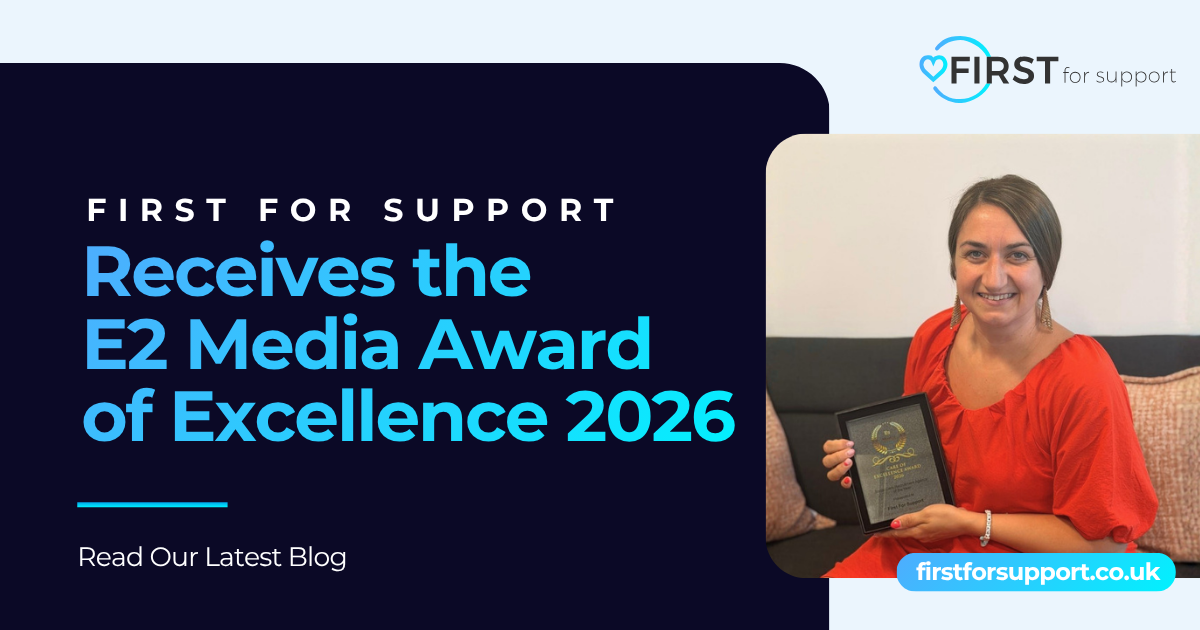
First for Support has been named Social Care Recruitment Agency of the Year in E2 Media’s 2026 Awards of Excellence, recognising our people-focused service.

May 26, 2026
Discover why local knowledge improves social care recruitment across Hampshire, Dorset, Devon, Wiltshire, and Manchester.

April 15, 2026
Learn what safer recruitment in children’s residential care means and how it protects services across Hampshire, Dorset and beyond.

March 16, 2026
Should you hire temporary or permanent social care staff? Discover the benefits of both and how the right balance can support safe, consistent care services.

March 2, 2026
First for Support wins a Southern Enterprise Award!

February 23, 2026
Learn how to choose a compliant social care recruitment agency across Hampshire, Dorset, Devon, Wiltshire and Manchester. Protect your service with safer recruitment and transparent compliance standards.